Custom software development
Custom software development built around the way your business runs
Safock is a custom software development company that designs and builds internal systems, client portals and back-office tools around the process your team already follows. We build for operators in the US, the UK, the GCC and Pakistan whose work has outgrown spreadsheets and off-the-shelf SaaS. You get working software from the first sprint, and you keep the code and the documentation.
/ The problem
What this fixes
- 01
One process is spread across four tools and a spreadsheet
Deals sit in one app, projects in another, hours and invoices in two more, and a master spreadsheet ties them together. Every handoff is a copy and paste, so the monthly numbers depend on whoever updated the sheet last.
- 02
Off-the-shelf software fights your workflow
You pay per seat for screens nobody opens, while the one approval step your business depends on needs a workaround. Over time the workarounds become the real system, and only two people understand them.
- 03
Access rules depend on people remembering them
Who can approve a purchase order or see a client's margin is enforced by habit and shared folders. One wrong link and a junior hire is looking at payroll.
- 04
Your last vendor kept the keys
A previous agency built the system, kept the repository and left almost nothing written down. Every small change starts with a negotiation and a quote.
/ What we build
Custom software development, built for your systems
- 01
CRMs shaped to your sales process
Pipelines, accounts, contacts and activity modelled on your actual sales motion, then connected to quoting, invoicing and the inbox your team already uses.
- 02
ERP and operations modules
Purchasing, approvals, inventory, projects, time and billing, delivered one module at a time so you can retire one spreadsheet before starting on the next.
- 03
Client, vendor and partner portals
Logged-in areas where each customer, supplier or franchisee sees their own orders, documents and status, and nobody else's.
- 04
Dashboards and reporting
Live views of the figures you report every week, read from the same database the work happens in, so totals match without a reconciliation step.
- 05
Internal tools
Admin panels, approval queues, data-entry screens and back-office utilities that remove a manual step from a process your team repeats daily.
- 06
Maintenance and extension
Support after launch for bug fixes, upgrades and new modules, from the same engineers who designed the data model.
/ How it works
The detail behind it
When Salesforce, HubSpot or Odoo is the better call
Buy first when your process looks like the one the product was designed for. Salesforce and HubSpot handle a standard sales pipeline well, and Odoo covers a lot of ordinary accounting and stock work. If your team can adopt their way of working with light configuration, a subscription is cheaper and faster than a build.
Build when the process is how you compete, or when the workarounds cost more than the work. We often end up with a mix: keep the SaaS that fits, connect it through its API, and build only the part it cannot express. Our integration work covers that wiring.
- Per-seat pricing grows faster than the value your team gets from the seats
- Your approval or pricing rules need custom code inside the SaaS anyway
- Data you need sits across several tools and nobody trusts the combined report
- You need to own the system and host it where your data rules require
Typed data models and access rules the database enforces
Every build starts from the data model: the records your business tracks, how they relate, and who may read or change each one. We write it in TypeScript and PostgreSQL so the types in the code and the tables in the database agree, and a whole class of bugs fails at build time instead of in front of a client.
Access control lives in the database as well as the interface. For a development agency we replaced four SaaS subscriptions and a master spreadsheet with one platform that runs deal to client to project to time to invoice to Stripe settlement, and Postgres row-level security decides which rows each user can see. Bollard, our own procurement and inventory product for multi-site operators, enforces its approval and three-way-match controls in the database across seven modules.
A rule enforced in the database holds even when someone writes a new screen, a script or a report later and forgets to check permissions.
What to check before you hire a custom software development company
Ask who owns the repository, what documentation you receive, and how often you will see working software. Ask how access rules are enforced and where the system will run. Clear answers to those questions tell you more than a portfolio page.
Our answers are fixed in the proposal. You own the code and every account it runs on. You see demos at the end of each short sprint. Security hardening and deployment are part of launch, and you speak to a founder rather than a sales team.
- Code in a repository under your organisation from day one
- Architecture, data model and admin documentation written for your team
- Scope, milestones, system design and pricing agreed before the build starts
- Handover and training so your staff can run and extend the system
What drives cost, timeline and maintenance
Price follows the number of modules, the number of roles and approval paths, the systems you need to connect, and how much data must move across from spreadsheets or old tools. Discovery maps those, and a fixed quote with milestones follows it.
Rolling out an existing product is quicker than building from nothing. Bollard reaches its first live site in 14 days because the modules already exist. A custom system takes longer, and we usually ship the module that removes the most manual work first so your team uses real software early. After launch we include 30 days to 3+ months of support, and long-term maintenance is available.
/ How we work
From first call to a system your team runs
- 01
Discovery
We start with your workflows, goals, and constraints, so we solve the problem you actually have.
- 02
Proposal & architecture
A clear scope, timeline, milestones, and system design, with honest pricing before any build starts.
- 03
Agile delivery
Short sprints with regular demos, so you see working software early and can steer as it takes shape.
- 04
Launch
Deployment, optimization, and security hardening are included. Nothing ships unless it is safe and secure.
- 05
Support & growth
30 days to 3+ months of support after launch, with long-term maintenance available as you grow.
- 06
Your team, enabled
Documentation and training so your people can operate and extend the system on their own.
/ Proof
Work that shows how we build
- Client workProfessional services, software developmentClient work / Professional services, software development
A software development agency
One internal platform for a development agency, covering deal, project, time, invoice and Stripe settlement, in place of four SaaS tools.
- Postgres row-level security
- Idempotent Stripe webhooks
- Deal-to-settlement workflow
Read the case study - usebollard.com
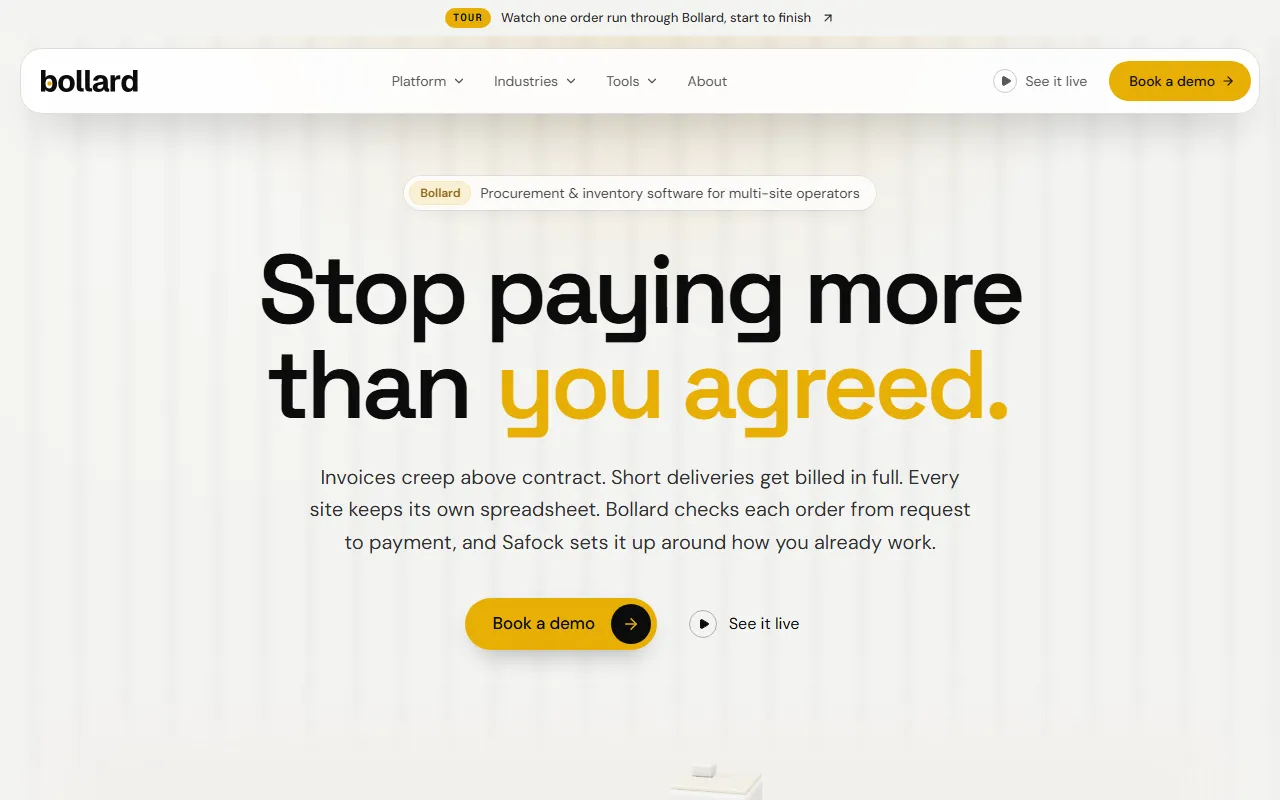
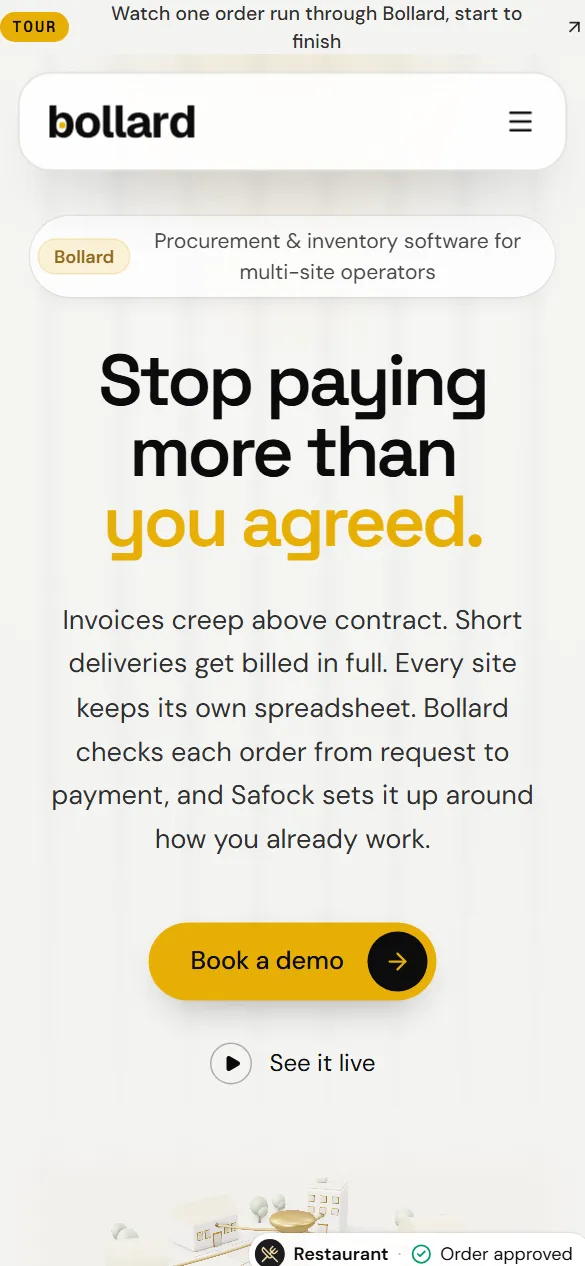 Our product / Procurement and inventory for multi-site operators
Bollard
Our own procurement and inventory software for multi-site operators: seven modules, controls enforced in the database, and an append-only audit trail.
- AI assistant on live data
- Database-enforced controls
- Append-only audit trail
14 daysPath to a first live site
- Client work52CoursesProfessional education, auctioneer licensingClient work / Professional education, auctioneer licensing
A US auctioneer training school
A custom LMS for a US auctioneer school, with state-aware paths, gated exams, SCORM and xAPI, and a CRM on Next.js and Supabase.
- SCORM and xAPI
- State-aware learning paths
- Built-in student CRM
52Courses
- Client workCybersecurity and AI educationClient work / Cybersecurity and AI education
A cybersecurity and AI training company
A cybersecurity and AI training LMS live at a university and a utility, with graded quizzes and publicly verifiable certificates.
- Verifiable certificates
- Partner admin areas
- Placement and graded quizzes
Read the case study - Client work180,000+Learners on the new platformOnline learning, hairstyling educationClient work / Online learning, hairstyling education
A leading hairstyling-education brand
Payments and course access rebuilt for an online hairstyling school with 180,000+ learners, while its editors kept WordPress.
- Purchase-aware course access
- Stripe payments and taxes
- WordPress kept for editors
180,000+Learners on the new platform
- eduhub.dev
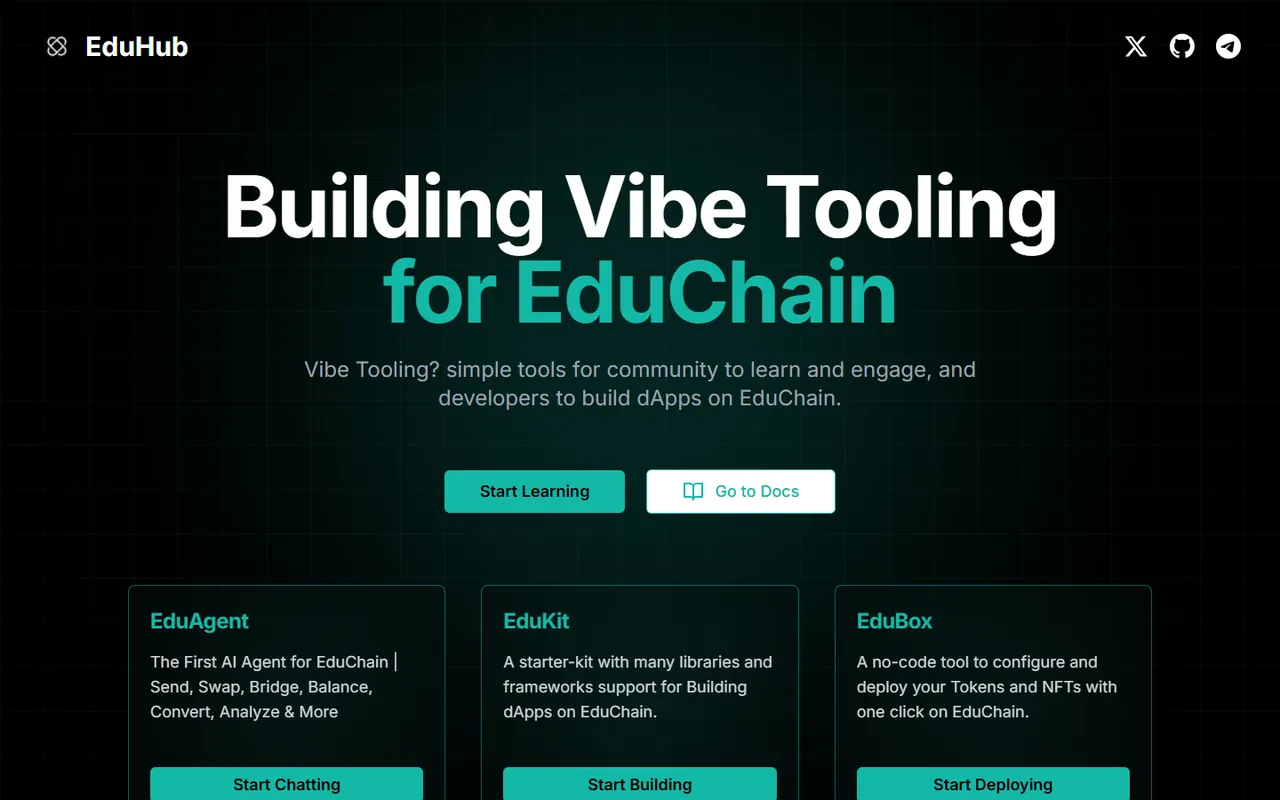
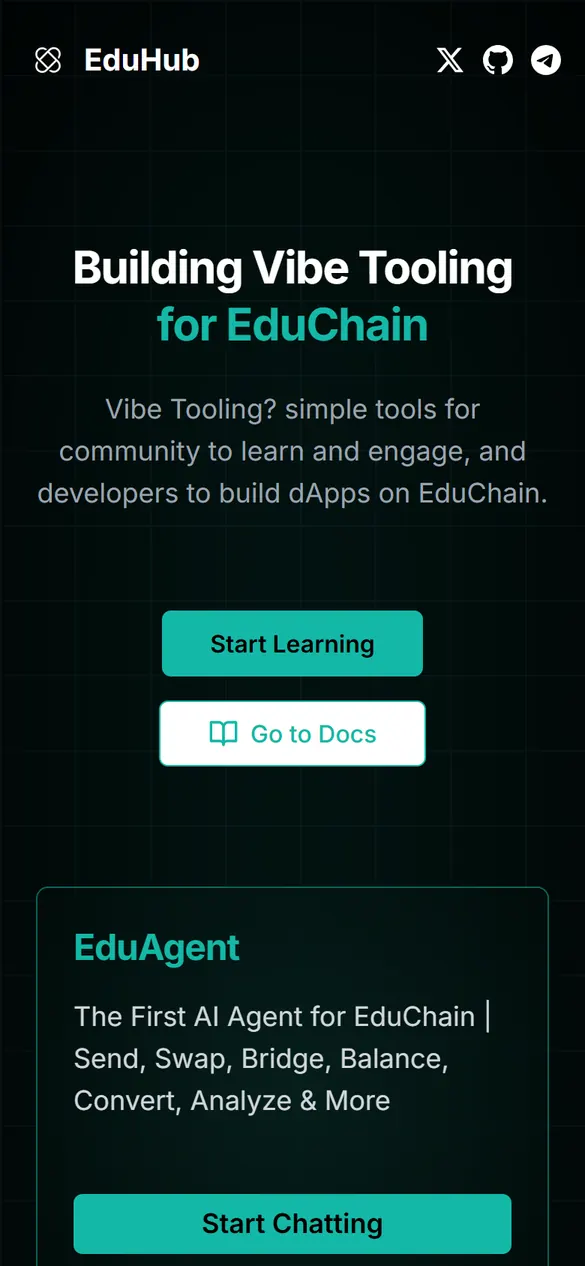 Client work / Web3 developer tooling
EduHub
A developer platform for EduChain, built and run by Safock: an AI agent, a dApp starter kit and a no-code token deployer.
- On-chain AI agent
- No-code token deployer
- npm dApp starter kit
10M+Mainnet transactions
/ FAQ
Questions buyers ask us
How much does custom software development cost?
It depends on the number of modules, user roles and approval paths, the systems the software must connect to, and the data to migrate. A two-role internal tool costs far less than an ERP spanning purchasing, stock and billing. We run discovery first, then send a fixed quote with milestones, so you know the price before any build work begins.
How long does custom software take to build?
Timeline comes out of discovery and depends on the number of modules, roles, integrations and the data to migrate. We split the build into short sprints and ship the module that removes the most manual work first, so your team uses working software early instead of waiting for one large release. Every sprint ends in a demo, and the proposal fixes the milestones before work starts.
Who owns the code and the data?
You do. The code lives in a repository under your organisation, the database and hosting accounts are in your name, and you receive architecture and data model documentation at handover. If you later move the work to an in-house team or another vendor, they can pick it up from the repository and the documents.
Can we start with one module instead of a full system?
Yes, and we usually recommend it. We pick the module that removes the most manual work, such as purchase approvals or time-to-invoice, build it on a data model with room for the rest, and put it into daily use. Later modules join the same database, so records never need moving twice. You decide after each module whether to continue, pause or change direction.
Where is the system hosted, and how is access controlled?
We deploy to cloud hosting in your account, in a region chosen to suit your data rules, such as keeping Saudi data in-country if PDPL planning calls for it. Access rules are enforced in the database with row-level security, so each user only reaches the records their role allows. Security hardening is part of every launch.
Do you maintain the software after launch?
Every launch includes a support period of 30 days to 3+ months, agreed in the proposal, covering fixes and adjustments once real users arrive. After that, long-term maintenance is available for upgrades, security patches and new modules. Your team also receives documentation and training, so you can handle routine changes yourselves if you prefer.
/ Related
Often paired with
- /01Custom CRM development
Custom CRM development
A CRM built around your pipeline and client lifecycle, from lead to invoice, connected to your tools and owned by you.
- Pipelines and deal management
- Client and contact records
- Quotes, projects and invoicing
- /02Custom ERP development
Custom ERP development
Procurement, inventory, operations and finance in one system built around your processes, with controls in the database.
- Procurement and approvals
- Inventory and transfers
- Operations modules
- /03LMS development
LMS development
Learning platforms with your access rules, SCORM and xAPI, gated exams, verifiable certificates, company admin areas and payments.
- Course access and commerce
- SCORM and xAPI support
- Quizzes and gated exams
- /04Web and app development
Web and app development
Fast websites, web applications and mobile apps with headless CMS, payments and accessibility planned from the first sprint.
- Interactive websites
- Web applications
- Mobile apps
/ Next step
Show us the spreadsheet your business runs on
Tell us what you are working on. You will speak with a founder, and you will leave the call with a clear next step, even if that step is not us.
Prefer writing? Send us a brief and a founder will reply.