Industry / Textile manufacturing
AI agents for textile mills, one per department
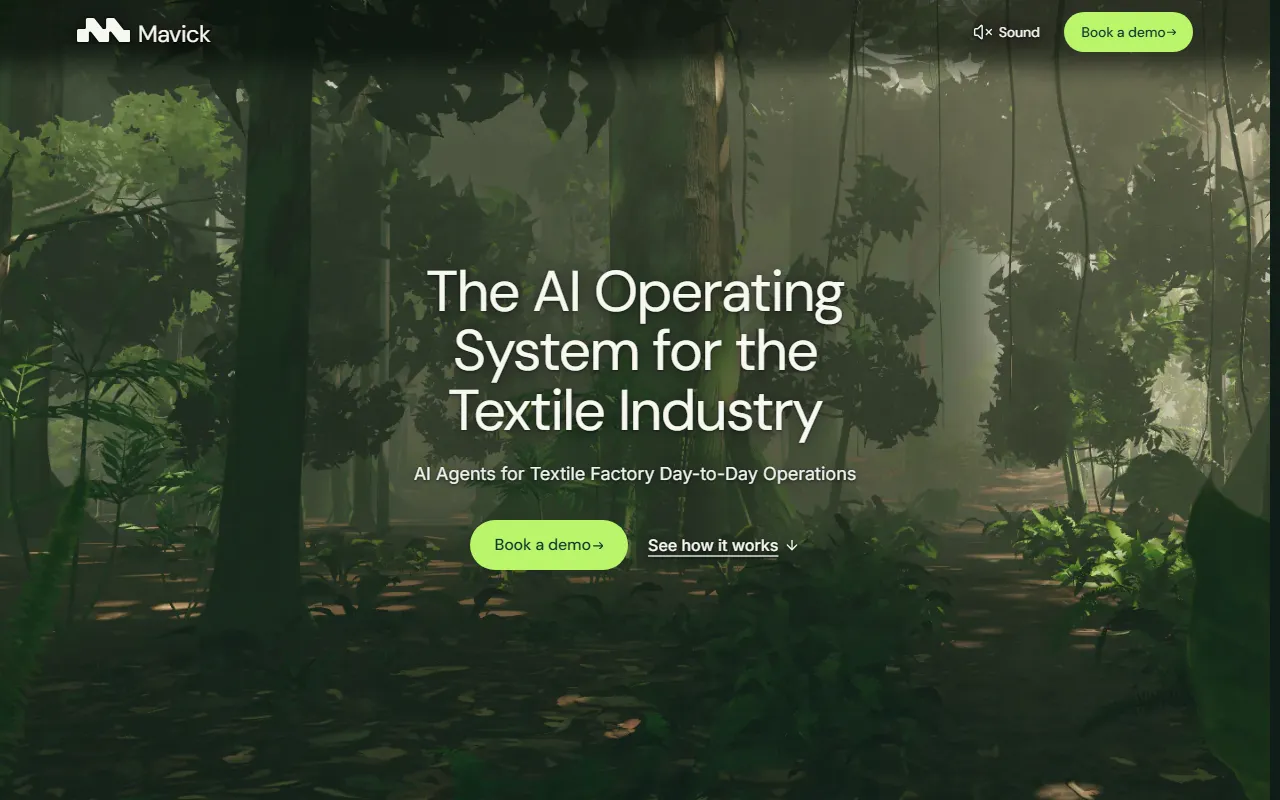
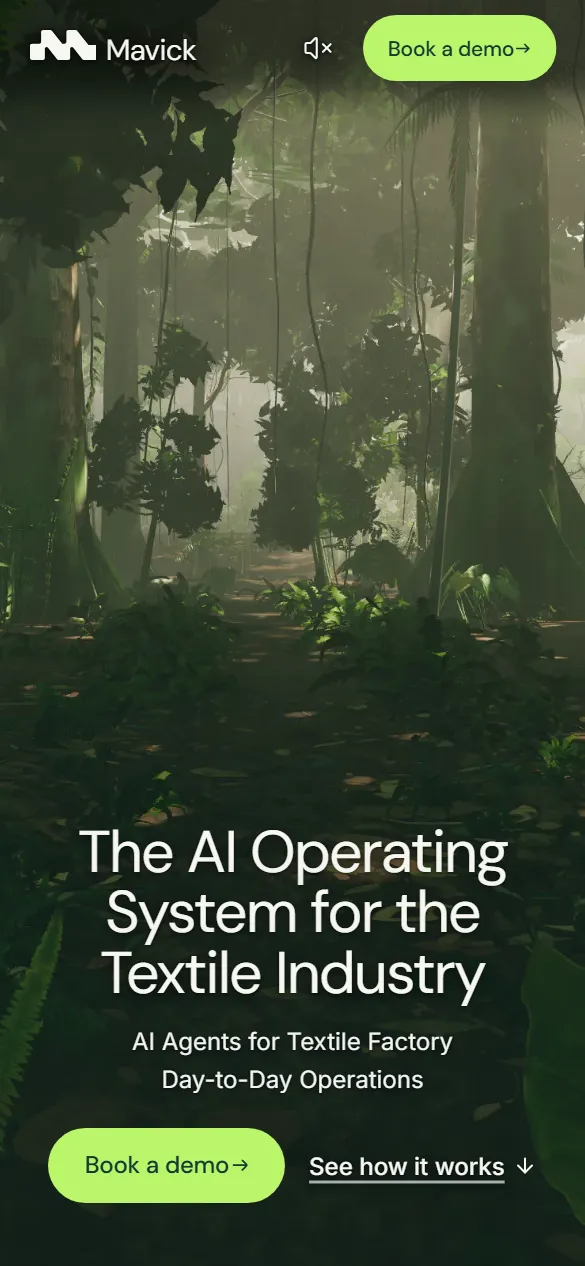
AI in textile manufacturing works best when each department gets its own agent that answers from that department's data, shows its sources, and waits for a person before it changes anything. That is how we built Mavick, our AI operating system for textile factories, and how we approach custom work for mills.
Reads your ERP live. Writes only after a person approves.
/ The problem
Why mills lose hours finding simple answers
- 01
Answers live in five places
Order status sits in the ERP, the latest change is in an email, QC results are in a sheet and the SOP is a PDF on someone's laptop. Finding one answer means chasing people.
- 02
One wrong write stalls a shipment
Letting software change live records is risky. A bad update to a dye recipe, a purchase order or a delivery date can hold up a whole export batch.
- 03
Departments should not share everything
Merchandising should not browse dyeing's recipes, and stores does not need finance's numbers. A single chatbot over the whole company leaks more than it helps.
- 04
Generic AI does not speak mill
Off-the-shelf assistants do not know what a lab dip, a yarn cover or a re-dye means, or which buyer file holds the answer.
/ Use cases
What an agent does in each department
- 01
Merchandising
Order status, buyer requirements and T&A questions answered from the ERP and buyer files, with the source shown.
- 02
Dyeing and processing
What is blocking a batch, which recipe was used, and a proposed re-dye entry that waits for a supervisor to approve.
- 03
Quality assurance
QC results and inspection history pulled together for a lot, a style or a supplier.
- 04
Stores and procurement
Yarn and chemical cover against open purchase orders, and requests that route for approval before anything is ordered.
- 05
Compliance
Certificates, audit evidence and SOPs found and summarised from the department's own document library.
- 06
Knitting and finishing
Shift questions answered from production sheets and SOPs, without exposing other departments' data.
How AI fits a textile mill
AI in textile manufacturing is most useful in the office work around production: finding answers across systems, preparing updates and keeping records straight. The approach that works treats each department as its own room. Each room gets one AI agent, the people who work there, and only the systems that department is allowed to touch.
Members ask questions in plain language. The agent reads that department's ERP data, sheets and documents and answers with citations, so anyone can check where an answer came from. When the next step would change something, such as writing a row, sending an email or updating the ERP, the agent stops and a department admin approves or declines. Approved actions run once. Declined actions are reported honestly to the person who asked.
Mavick: the textile AI operating system we built
Safock built this model into Mavick, formerly Safock Textile, an AI operating system for textile factories. A factory owner sets up departments from a catalogue of 32 textile department templates, invites people by email and connects the systems each department may use. Everything a person or agent does is written to an append-only activity trail.
Mavick reads ERP data live and writes only after approval. It connects to SAP Business One, SAP S/4HANA, Odoo, Oracle NetSuite, Microsoft Dynamics 365, WFX Cloud ERP and Datatex NOW, as well as Gmail, Outlook, Google Sheets, Slack and WhatsApp Business. Owners also get monthly spend ceilings and a hold that pauses chat across the factory.
Custom builds for mills with their own systems
Some mills need more than a product: a custom ERP connector, a costing tool, a QC app for the floor, or a WhatsApp agent that answers buyers and suppliers. We build those on the same principles. Reads are fast and cited, writes wait for a person, and departments stay separate by design.
We start with one department and one real workflow, prove it with live data, then expand. Your team is trained along the way so they can manage agents, approvals and connectors themselves.
/ Deliverables
What a mill gets
- A department-by-department map of where answers and approvals sit today
- AI agents set up per department, with instructions in plain language
- ERP and tool connections with read-live, write-after-approval rules
- An approvals inbox and an append-only activity trail
- Training for department admins and members
- Support after go-live as departments and rules change
/ Proof
Products we built for operations like yours
- usebollard.com
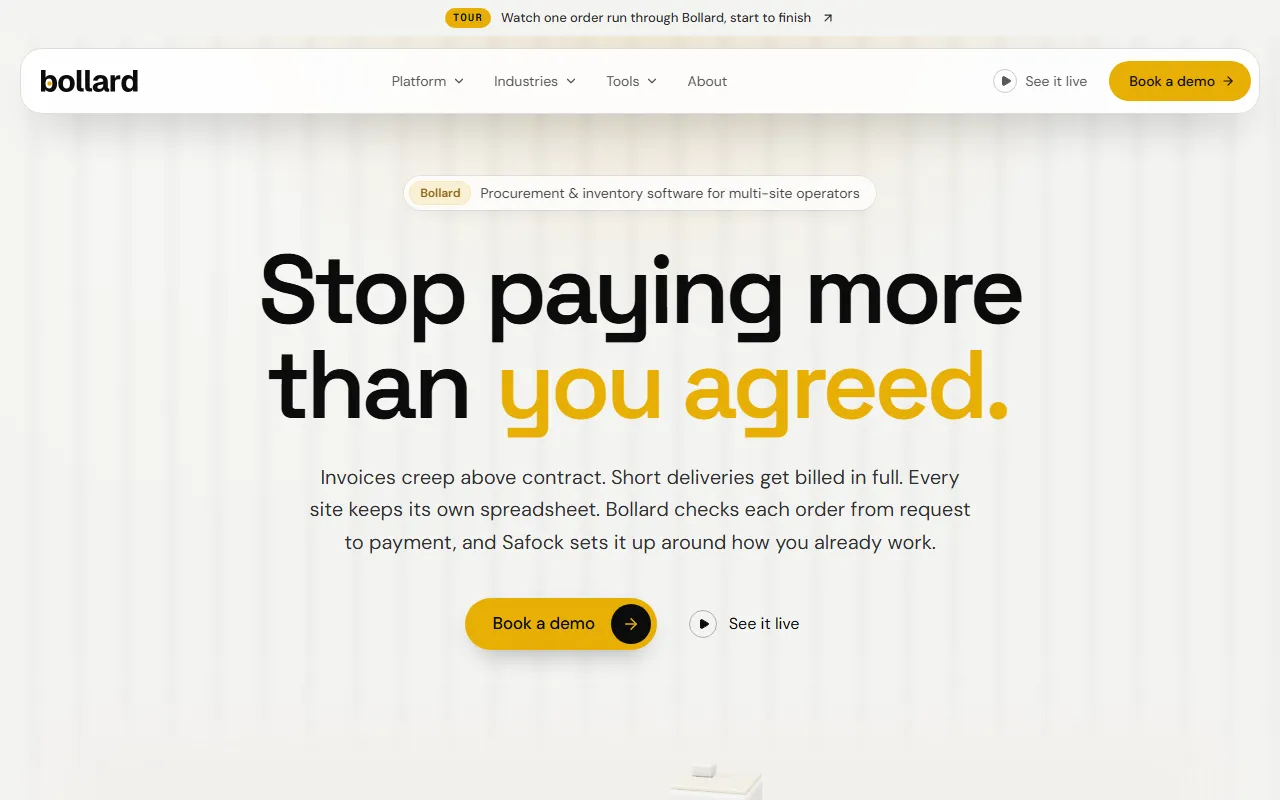
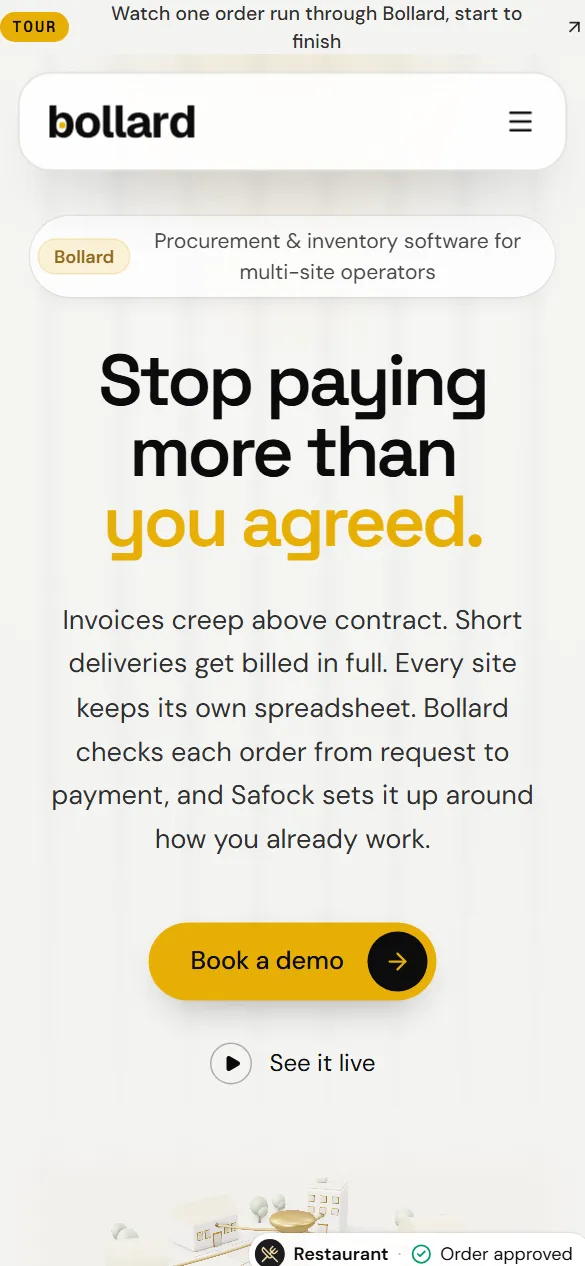 Our product / Procurement and inventory for multi-site operators
Bollard
Our own procurement and inventory software for multi-site operators: seven modules, controls enforced in the database, and an append-only audit trail.
- AI assistant on live data
- Database-enforced controls
- Append-only audit trail
14 daysPath to a first live site
- mavick.siOur product / Textile manufacturing
Mavick
Our AI operating system for textile factories: one agent per department, cited answers, and human approval before any change to a live system.
- Department-scoped AI agents
- Human approval before writes
- Answers with citations
32Department templates
/ FAQ
Questions mill owners ask
How is AI used in textile manufacturing?
Most value today comes from office and coordination work: answering order, stock and quality questions from ERP data and documents, preparing updates, and routing approvals. Computer vision for fabric defects is a separate field. We focus on agents that help each department find answers and act safely on live systems.
Will the AI change our ERP without permission?
No. In Mavick, agents read your ERP live but every write waits for a department admin to approve it. The approval card shows exactly what will change, and the action runs once or not at all. Everything is recorded in an activity trail that cannot be edited.
Can departments see each other's data?
Only if you allow it. Each department is a separate room with its own agent, people and connected systems. Someone who tries to open a department they do not belong to gets a page-not-found response, not a hint that it exists.
Which ERPs do you work with?
Mavick connects to SAP Business One, SAP S/4HANA, Odoo, Oracle NetSuite, Microsoft Dynamics 365, WFX Cloud ERP and Datatex NOW. If your mill runs another system or a local ERP, we can build a connector as part of a custom engagement.
Where do we start?
Pick one department with a clear daily pain, often merchandising or dyeing. We set it up with real data, your team uses it for a few weeks, and you decide where to go next based on what it actually saved.
/ Related
Services that support textile operations
- AI agent development
AI agents
Custom AI agents that read your data, use your tools, and ask a person before they change anything.
Explore ai agents - WhatsApp AI agent
WhatsApp AI agent
WhatsApp AI agents on the official Business Platform that answer, book and follow up in Arabic, English and Urdu.
Explore whatsapp ai agent - Custom software development
Custom software development
CRMs, ERPs, portals and internal tools shaped to your process, with access rules in the database and code you own.
Explore custom software development - Safock Academy
Corporate AI training
Hands-on AI workshops for non-technical teams: safe data use, prompting, connectors, and a working tool built by each participant.
Explore corporate ai training
/ Next step
Start with one department
Tell us what you are working on. You will speak with a founder, and you will leave the call with a clear next step, even if that step is not us.
Prefer writing? Send us a brief and a founder will reply.